Comprehensive Guide to Diamond Cutting Blade Selection for Carbon Steel, Cast Iron, Titanium Alloys and More
10 04,2026
Technical knowledge
This article provides an in-depth analysis of diamond cutting blade selection tailored for common metal materials such as carbon steel, cast iron, and titanium alloys. It systematically explains the suitability of resin-bonded versus metal-bonded blades and illustrates how cutting parameters—feed rate, depth of cut, and cooling methods—impact surface quality and operational efficiency through practical machining cases. Offering a reusable selection framework, this guide empowers machining professionals to quickly identify optimal tooling solutions, minimizing trial-and-error costs while enhancing consistency and product yield.
Comprehensive Guide to UHD Diamond Cutting Blade Selection: Optimal Solutions for Carbon Steel, Cast Iron, Titanium Alloy, and More
For professionals in mechanical processing, selecting the right diamond cutting blade critically influences efficiency, surface quality, and operation costs. UHD presents a data-driven approach to blade selection tailored for common metal substrates such as carbon steel, cast iron, titanium alloy, and copper alloy. By understanding the interplay between blade bond types, cutting parameters, and material properties, this guide empowers engineers and workshop supervisors to optimize tool life and consistency.
Metal Material Characteristics and Their Impact on Diamond Cutting Blade Performance
Metal substrates vary widely in hardness, thermal conductivity, and abrasiveness, all of which affect diamond blade wear and cutting efficacy:
- Carbon Steel: Moderate hardness (~150-220 HB), good thermal conductivity, tends to generate mild heat during cutting.
- Cast Iron: Brittle with high abrasiveness and hardness (~200-300 HB), often leading to accelerated diamond wear.
- Titanium Alloy: High strength but poor thermal conductivity; prone to heat concentration causing blade clogging and edge degradation.
- Copper Alloy: Soft with excellent thermal conductivity, which generally results in lower tool wear but requires different cut strategies.
Bond Types: Resin vs. Metal Bonds—Choosing the Right Combination
UHD diamond cutting blades utilize two main bond types, each suited for specific cutting scenarios:
| Property |
Resin Bond |
Metal Bond |
| Hardness |
Moderate; flexible for mild to medium hardness metals |
High; excellent for hard or abrasive materials |
| Thermal Conductivity |
Lower—better for lower heat applications |
Higher—dissipates heat efficiently |
| Wear Resistance |
Good for intermittent or light-duty cuts |
Superior for continuous heavy-duty cutting |
Case Studies: How Cutting Parameters Affect Quality and Tool Life
Examining real-world applications demonstrates the sensitivity of blade performance to cutting parameters:
Example: In cutting high-strength titanium alloy strips, reducing the feed rate from 0.15 mm/s to 0.1 mm/s coupled with optimizing coolant flow temperature (~15°C) increased blade life by 30% and improved surface finish Ra from 1.2μm to 0.8μm.
Additionally, adjusting cut depth in cast iron from 1.5 mm to 1.0 mm stabilized machining vibrations, reducing micro-fractures on the blade edge.
Structured Selection Framework for Rapid Decision-Making
UHD developed a stepwise logic framework enabling technicians to pinpoint the best blade by evaluating:
- Material identification (hardness, abrasiveness, thermal conductivity)
- Processing mode (intermittent vs. continuous cutting)
- Required surface finish and tolerance
- Available cooling method
This framework shortens trial-and-error cycles by approximately 40%, facilitating faster ramp-up on new production runs.
The Critical Role of Cooling Strategy, Feed Rate, and Cut Depth
Optimizing the process stability depends heavily on these parameters:
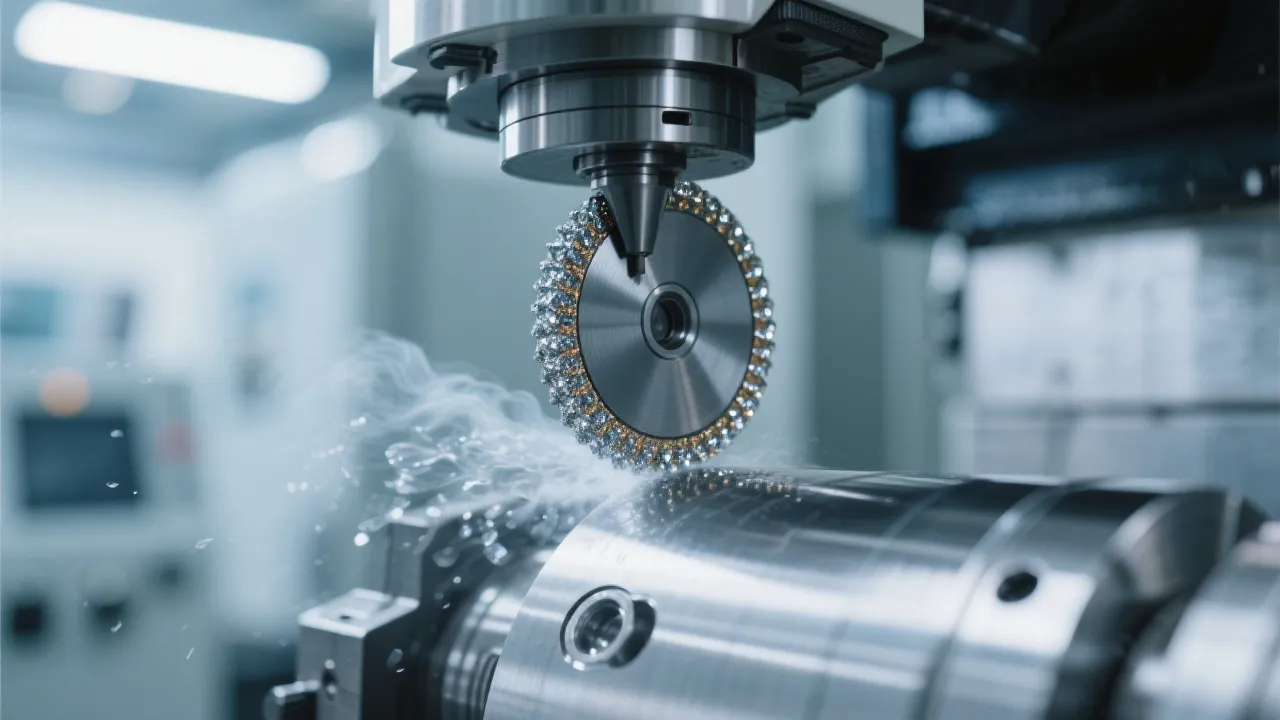
- Cooling Methods: Flood cooling excels for heat-sensitive alloys like titanium; mist cooling benefits carbon steel operations by minimizing thermal distortion.
- Feed Rate: Higher feed rates accelerate production but may reduce blade life or surface smoothness; precision cutting requires feed rate control within ±0.05 mm/s.
- Cut Depth: Excessive depth increases tool load and heat; ideally, keep depth below 1.5 mm for abrasive metals to preserve diamond integrity.
Industry Standards and Practical Tips
Conforming to ISO 3252 and ANSI B212.12 ensures cutting blade consistency and safety compliance. UHD encourages routine inspection of blade wear indicators and maintaining coolant pH between 8.5–9.5 for corrosion prevention.
Question for readers: Which metal substrate poses the greatest challenge in your cutting operations and why?