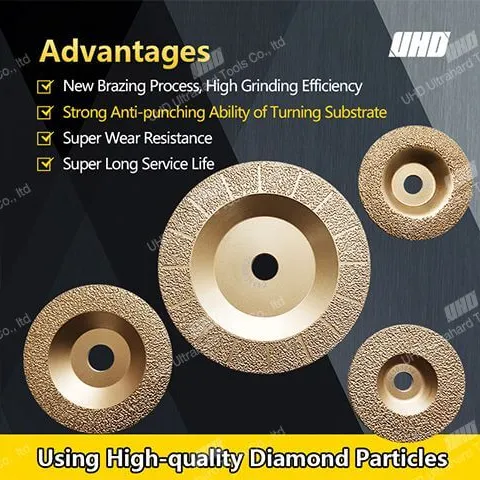
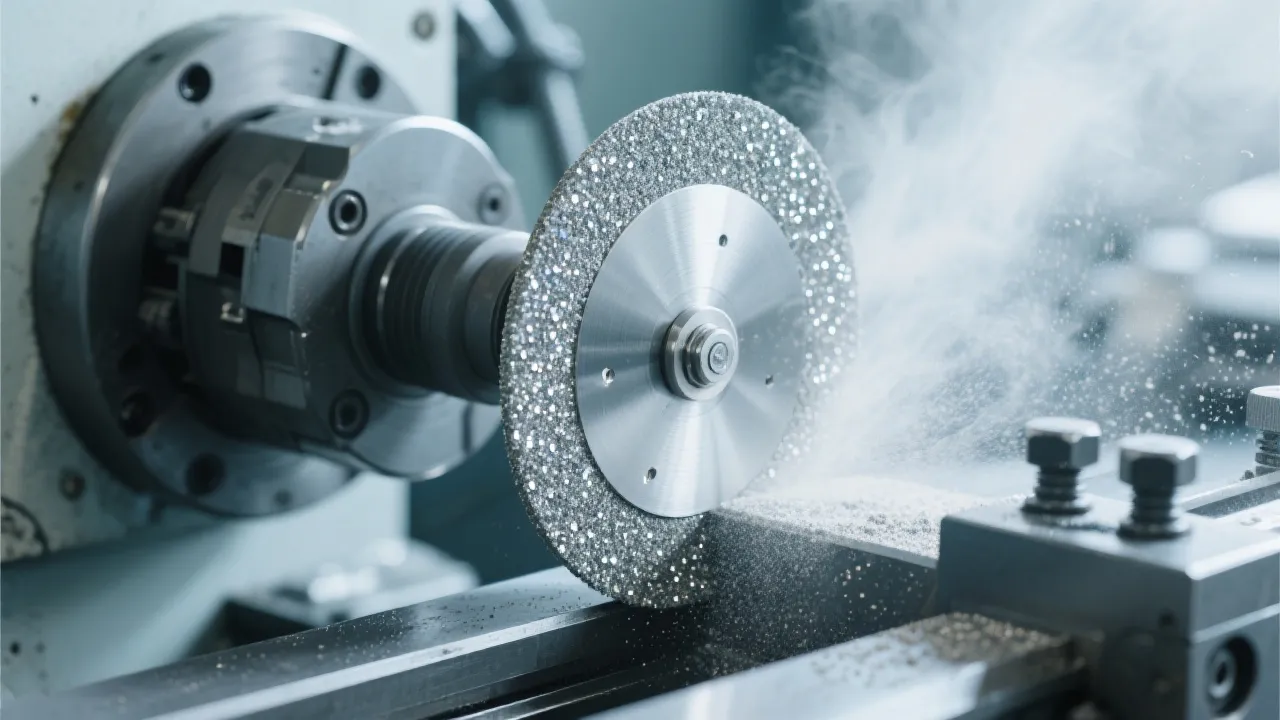
Brazed diamond grinding wheels, especially the cup-type, have become indispensable tools in modern manufacturing. Their superior abrasion resistance and exceptional durability have revolutionized processing methods for a broad range of hard materials, including gray cast iron, ductile iron, stainless steel, and numerous non-metallic hard substrates.
Brazed diamond wheels are constructed by bonding diamond grits directly to a metal base via a high-temperature brazing process. This technique ensures a robust connection that withstands the rigors of demanding machining environments, markedly enhancing tool lifespan and processing consistency. Typically, these wheels cater excellently to materials difficult to machine, such as gray cast iron (up to 250 HB hardness), ductile iron, various grades of stainless steel, ceramics, and composites.
When employed in grinding or cutting, brazed diamond cup wheels demonstrate significant benefits:
A leading manufacturer of stainless steel automotive parts adopted brazed diamond cup wheels to address frequent premature wear issues. Over a three-month trial, the average grinding time per batch decreased by 28%, with the wheels lasting 45% longer than the previous resin-bonded solutions. Operators also reported improved coolant flow and reduced heat generation, critical factors in maintaining material properties.
Despite their advantages, operators might encounter challenges such as:
| Issue | Cause | Recommended Solution |
|---|---|---|
| Abrasion & Wear | Excessive feed rates or inadequate coolant | Optimize feed speed; ensure continuous coolant flow |
| Wheel Fracture or Breakage | Mechanical shock; improper mounting or unbalanced machinery | Use precise mounting fixtures; maintain spindle balance; avoid abrupt force application |
| Loss of Grinding Efficiency | Clogging from processed materials or glazing of the abrasive surface | Regular dressing; utilize air blasts or ultrasonic cleaning |
Ensuring the longest service life of brazed diamond wheels requires:
Q1: How does brazing impact the wheel’s bonding strength compared to other methods?
A1: Brazing forms a metallurgical bond that exceeds mechanical adhesion, offering outstanding durability in high-stress grinding scenarios.
Q2: Can these wheels be used for non-metallic hard materials?
A2: Absolutely. Brazed diamond cup wheels excel in processing ceramics, carbide, and composites due to diamond’s extreme hardness.
Q3: What safety precautions should be prioritized when using brazed wheels?
A3: Operators must inspect wheels before use, adhere to recommended RPM limits, and employ proper mounting tools to prevent accidents.