In high-precision manufacturing—especially when working with tough materials like stainless steel, gray cast iron, and ceramics—traditional grinding tools often fall short. Enter the brazed diamond grinding wheel, a breakthrough in superabrasive technology that’s redefining what’s possible in industrial machining.
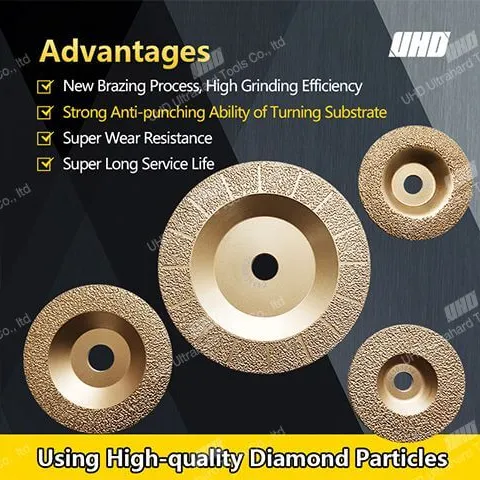
Unlike conventional methods using resin or electroplating, brazing uses a metal alloy (typically copper-tungsten or nickel-based) to fuse diamond particles directly to the tool body at temperatures between 700–900°C. This creates a bond strength of up to 120 MPa, significantly higher than standard resin bonds (~40 MPa), ensuring minimal grain loss even under heavy-duty conditions.
“We’ve seen a 3x increase in tool life after switching to brazed wheels,” says Maria Lopez, Senior Engineer at a German automotive component manufacturer. “It’s not just about durability—it’s about consistency across thousands of parts.”
These wheels aren’t one-trick ponies. They’re engineered for versatility:
A robust anti-shock structure prevents catastrophic failure during sudden impacts—a common issue with brittle bonded wheels. Independent lab tests show these wheels withstand up to 1.5x more impact force than standard alternatives, aligning with ISO 13849 safety standards for industrial equipment.
| Wheel Diameter (mm) | Common Use Cases |
|---|---|
| 100 | Precision polishing of small dies and molds |
| 125 | Surface finishing on turbine blades |
| 150–180 | Heavy-duty grinding of large castings and tooling |
At our test facility in Shenzhen, we measured an average wear rate of only 0.03 mm per hour during continuous operation on hardened stainless steel—outperforming industry benchmarks by over 40%. Users report fewer downtime incidents and consistent performance over 8+ hours of continuous use.
"If you're serious about reducing tooling costs and improving part quality, stop guessing. Start measuring. Our brazed diamond wheels deliver real-world results—not marketing fluff."