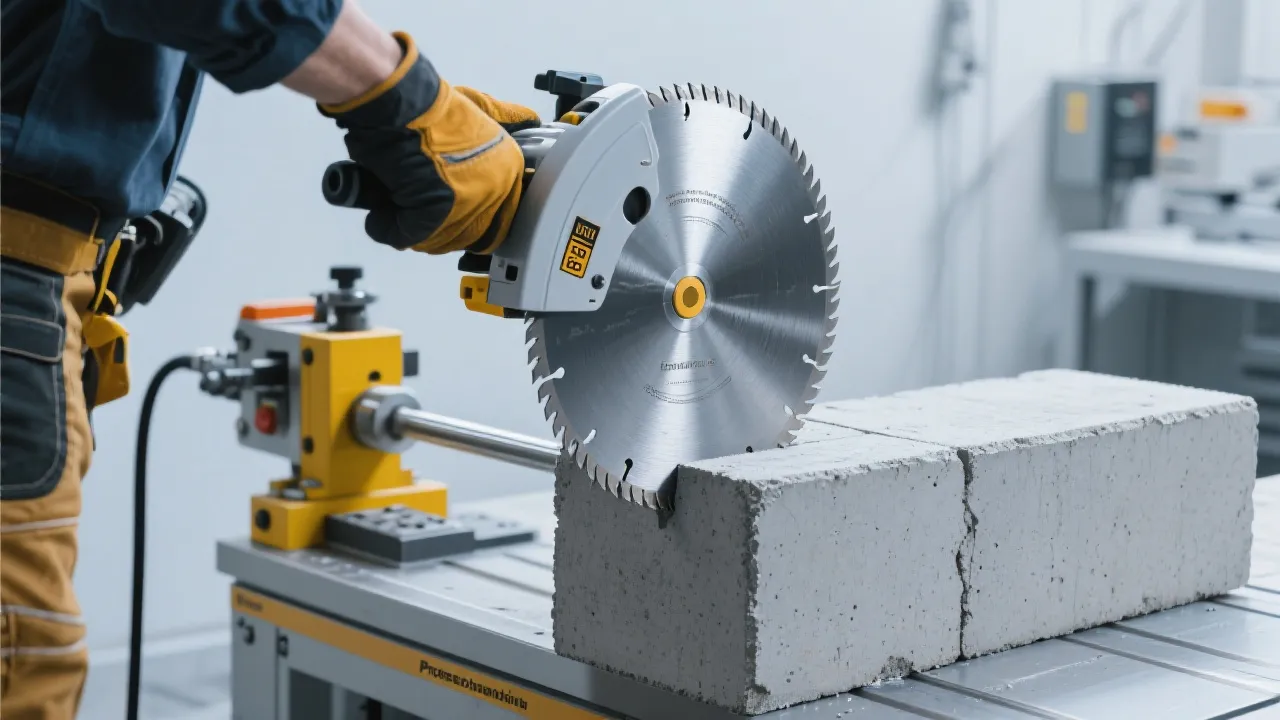
In high-precision cemented carbide machining, brazed diamond grinding tools have become indispensable due to their unmatched durability and grinding efficiency. Leveraging state-of-the-art brazing technology, these tools significantly enhance tool life while ensuring superior surface finish quality. This article explores the design, manufacturing techniques, and practical applications of these specialized grindstones, providing actionable insights into performance optimization and operational best practices.
The core advantage of brazed diamond grinding wheels lies in the metallurgical bond achieved between synthetic diamond particles and the tool body. Unlike electroplated or resin-based bonds, the brazing process employs a high-temperature metal alloy binder, ensuring high thermal conductivity and mechanical strength. This results in enhanced abrasive retention and resistance to diamond damage during high-speed grinding.
Typically, the brazing alloy melts at temperatures exceeding 800°C, creating a robust interface that can withstand severe grinding stresses. The synthetic diamonds used are usually CVD or HPHT types with sizes ranging from 150 to 600 mesh, optimized for different finishing requirements.
| Parameter | Typical Range | Impact on Performance |
|---|---|---|
| Diamond Grain Size | 150-600 mesh | Controls cutting smoothness and finish quality |
| Brazing Temperatures | 800°C - 1000°C | Ensures optimal bond strength and thermal stability |
| Bond Material | Copper-based alloys | Provides excellent heat dissipation and tool longevity |
While primarily developed for cemented carbide machining, brazed diamond grinding wheels exhibit versatility across diverse hard and brittle materials, including ceramics, glass, and advanced composites. Their ability to maintain sharp cutting edges at high temperatures makes them ideal for precision tool grinding and surface finishing operations.
Industrial use cases demonstrate that such tools excel in applications requiring:
Their durability often results in operational life improvements of up to 35%, reducing downtime related to tool changes and regrinding.
An aerospace manufacturing facility substituted traditional resin-bonded wheels with brazed diamond tools for grinding cemented carbide turbine blades. The results indicated:
These performance gains contributed directly to throughput advances and cost savings estimated around 15% annually.
Optimum tool performance demands conscientious selection and precise process control. Critical factors to consider include:
Furthermore, regular inspections for brazed layer integrity can preempt premature tool failure—a maintenance procedure that is straightforward yet highly impactful on tool lifecycle.
Brazed diamond grinding tools uniquely combine toughness, thermal stability, and precision—qualities indispensable for modern industrial machining challenges. Their resistance to abrasive wear and chipping enables operators to increase throughput without compromising product quality. For enterprises aiming to minimize tool replacement frequency and maximize consistency in hard material processing, these tools represent an investment with measurable ROI.
.png?x-oss-process=image/resize,h_1000,m_lfit/format,webp)


.png?x-oss-process=image/resize,h_1000,m_lfit/format,webp)